
Key Takeaways
Prong settings use slim metal claws to hold a gemstone securely above the band, making them the most popular style for diamond engagement rings since the early 1900s. This classic approach has endured because it maximizes sparkle by allowing light to reach the stone from many angles.
-
Prong settings expose more of the center stone than bezel or flush settings, enhancing the diamond’s brilliance—but they offer less protection at the girdle and corners
-
Choosing between four or six prongs is mainly a trade-off between more visibility (4 prong) and more perceived security (six prongs), with both being secure when well crafted
-
Metals like platinum, 18k yellow gold, and 14k white gold behave differently in prongs, affecting durability and how the diamond color appears
-
Trabert Goldsmiths can customize prong style, metal, and height for both new designs and heirloom restorations
What Is a Prong Setting?
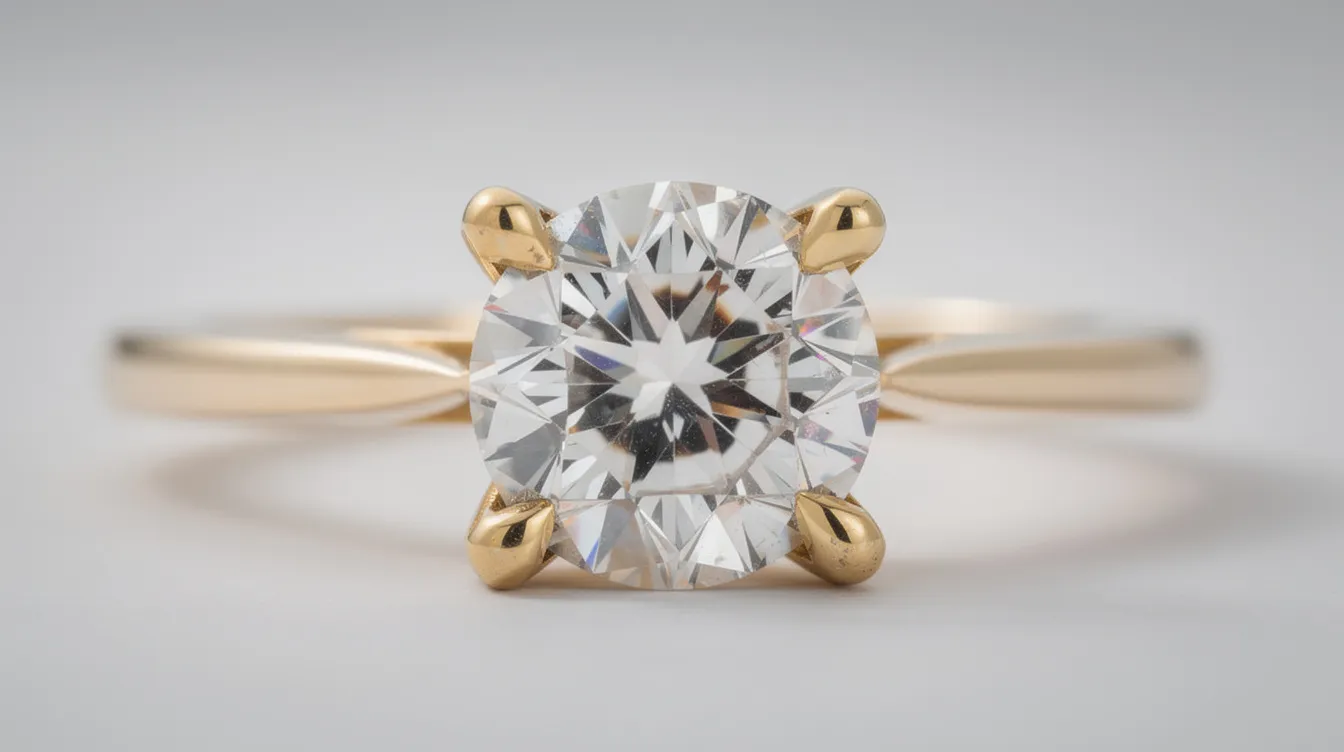
A prong setting (also called a claw setting) uses three to eight small metal projections to grip a gemstone at or just above the girdle, suspending it gracefully above the band. This mount creates an open structure that lets more light enter the stone from multiple angles.
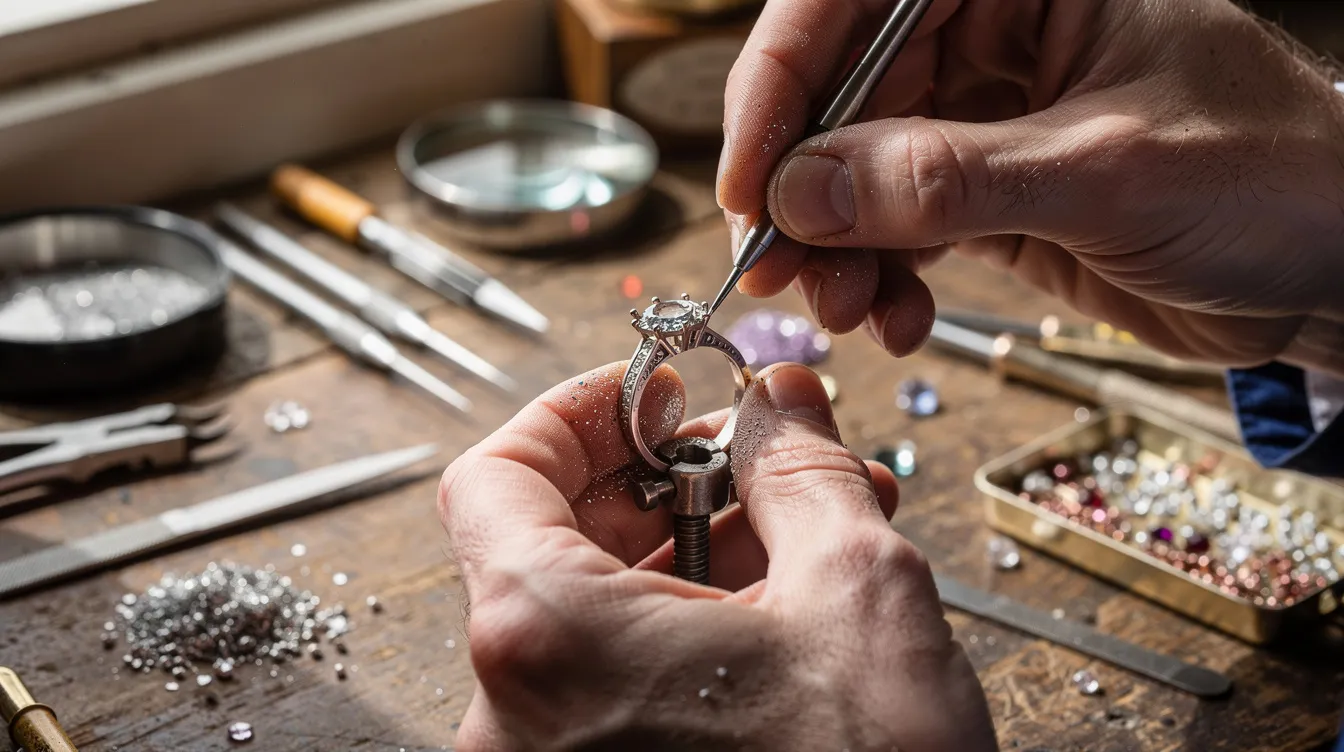
The jeweler forms pointed prongs from the ring’s head, carefully positions the stone, then bends and burnishes the tips over the diamond for a secure hold. This process requires significant skill—the stone must sit level from all angles while remaining held securely in place.
Four and six prongs are the standards for most engagement rings, while eight prongs accommodate larger diamonds or halo designs. Classic prong settings work beautifully with shapes like round, oval, emerald, pear, marquise cut, and princess cut stones. A 1.50 ct round diamond, for example, sits elegantly in a six-prong platinum head, allowing the stone to capture light from virtually every direction.
While especially associated with engagement rings, prong settings also appear in classic stud earrings and solitaire pendants where maximum brilliance matters.
History and Iconic Prong Designs
Prong-style ring mounts evolved in late 19th-century Europe and the United States as diamond cutting techniques and precious metal alloys improved. These advances made it possible to create delicate yet secure settings that showcased stones rather than hiding them.
Six-prong solitaire designs became a symbol of modern engagement in the early 1900s, particularly in major cities like New York and San Francisco. The elevated solitaire—what many recognize as the tiffany setting style—rose to prominence during the post–World War II boom of the late 1940s and 1950s. That dramatic silhouette still shapes contemporary aesthetics today.
At Trabert Goldsmiths in San Francisco, many custom designs reinterpret these historic prong silhouettes with lower profiles and more protective baskets suited for everyday wear.
Benefits and Drawbacks of Prong Settings
A prong setting offers undeniable beauty, but it isn’t perfect for every lifestyle. Understanding both sides helps you make a confident choice.
The primary benefit is maximum light return and sparkle. Because prongs use less metal than bezels or channel settings, more of the diamond remains exposed to light, enhancing shine and brilliance. This creates strong visual emphasis on the center diamond itself—the stone appears larger and more prominent. Prong settings are also relatively easy to clean since the open structure allows access during professional maintenance, and they’re simpler to resize or modify later.
The trade-offs? Less protection at the girdle and corners means slightly more vulnerability for the stone. High set prongs can snag on knits, hair, or gloves if they’re too tall or poorly finished. Prong settings also require periodic professional checks to ensure the metal hasn’t thinned.
Consider a busy San Francisco professional who wears gloves regularly—a low-set 4 prong or 6-prong basket minimizes catching while still delivering the sparkle they love.
Types of Prong Settings by Shape and Style
The term “prong setting” is actually an umbrella covering many variations. The fine details of shape, size, and arrangement dramatically change both the look and function of your ring.
Claw (Pointed) Prongs
Claw prong styles feature tapered, slightly pointed tips that pinch the stone for a sleek, modern profile—think tiny talons gripping the diamond. Petite claw prongs are especially delicate on thin 1.5–2.0 mm bands popular in contemporary designs.
A 1.25 ct oval in petite claw prongs, for example, maximizes stone visibility while maintaining a refined aesthetic. At Trabert Goldsmiths, careful finishing keeps pointed prongs smooth enough that they won’t feel sharp when you run a fingertip over the stone.
Rounded (Classic) Prongs
Rounded prongs feature dome or ball-shaped tips—what most people picture when imagining a solitaire ring. They offer a softer, more vintage feel and work beautifully with classic round diamonds or old European cuts in four prongs or six-prong layouts.
A 1.00 ct round diamond in a 6-prong rounded head subtly enhances the stone’s roundness while conveying timeless security.
V-Tip (Corner) Prongs
V prongs form a small v shape that hugs sharp points on princess cut, marquise, and pear stones to guard against chipping. They’re essential for protecting vulnerable corners.
A 1.20 ct marquise diamond set north–south might use V-tips at each point with rounded side prongs—balanced protection without obscuring the dramatic silhouette.
Double Prongs
Double prongs place two slimmer prongs side by side at each contact point, creating a graceful, antique-inspired look. They’re favored on larger diamonds (2.00 ct and above) or elongated shapes like emerald and cushion cuts to distribute pressure evenly.
A 2.25 ct cushion-cut diamond with double prongs at each corner on a platinum setting demonstrates how this style reads as delicate detail rather than bulky element.
Shared Prongs
Shared prongs grip two neighboring stones at once, commonly used for smaller diamonds along bands or in eternity rings. This style minimizes visible metal between stones, creating continuous sparkle.
A three-quarter eternity wedding band with 1.5 mm round lab-grown diamonds in shared prongs sits flush with a prong-set solitaire—seamless and elegant.
High-Set vs. Low-Set Prongs
High-set prongs lift the stone above the finger for extra drama and light exposure, but increase snagging risk. Low-set prongs nestle the stone closer to the band, preferred by those who work with their hands.
Compare a high-set 4-prong solitaire showcasing a 1.75 ct round diamond versus a lower-set 6-prong basket holding a 1.20 ct oval for practical daily wear. Discuss your routine with a professional jeweler to tailor prong height to your lifestyle.
4-Prong vs. 6-Prong Settings
This is one of the most common decisions when choosing an engagement ring prong setting.
Four prongs offer more stone visibility with fewer prongs covering the girdle. They’re slightly easier to clean and create a somewhat square outline on round stones—ideal for 0.75–1.25 ct diamonds where maximum exposure matters. Because there’s less metal involved, the stone may appear slightly larger.
Six prongs provide more visual coverage and a rounder overall outline. Many consider this the cohesive look of a classic solitaire, particularly for round brilliants around 1.00 ct and above. The additional contact points distribute pressure more evenly.
Consider: a 1.00 ct lab-grown round diamond in 4-prong 18k yellow gold versus a 1.50 ct natural round diamond in 6-prong platinum from Trabert Goldsmiths. Both offer excellent choice configurations—the decision comes down to personal style, carat weight, and how many prongs feel right to you.
When well crafted and regularly inspected, both designs keep your diamond secure for decades.
Choosing the Right Metal for Prongs
Prong metal affects durability and how diamond color appears against the setting. The gemstone’s perceived warmth or coolness changes based on this choice.
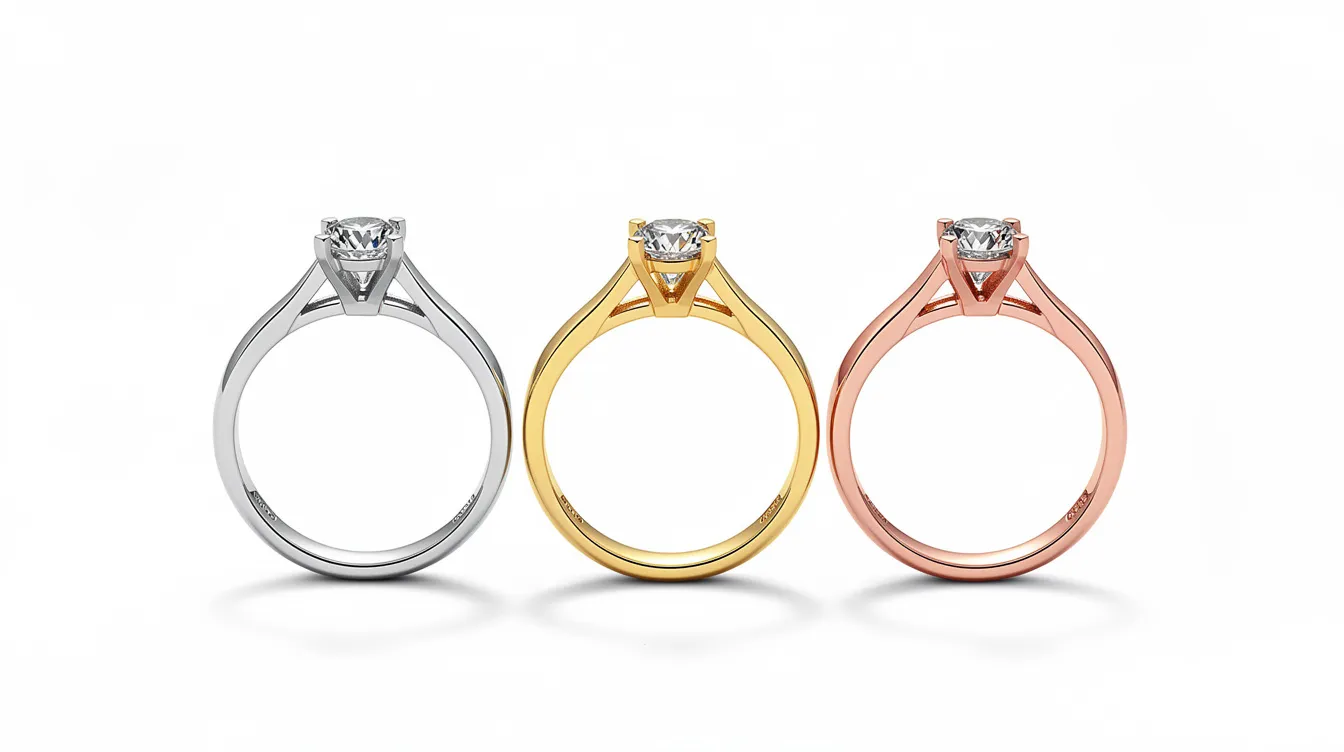
Platinum Prongs
Platinum is dense and resists wear, making it an excellent long-term choice for prongs on frequently worn engagement rings. It’s naturally white and hypoallergenic, maintaining a neutral backdrop for colorless diamonds without needing rhodium plating.
Platinum develops a soft patina over years rather than thinning—reassuring for heirloom-caliber designs. A 1.80 ct round brilliant in a platinum 6-prong head on an 18k rose gold shank offers durability plus beautiful contrast.
White Gold Prongs
14k or 18k white gold provides a bright, modern appearance popular with clients in their 20s–40s. White gold is alloyed with other metals and coated with rhodium, which slowly wears and requires replating every few years.
White gold prongs pair well with F–J color diamonds and lab-grown stones. A 1.05 ct round lab-grown diamond in 14k white gold 4-prongs on a pavé band exemplifies contemporary elegance. Trabert Goldsmiths offers rhodium touchups as part of long-term care.
Yellow and Rose Gold Prongs
Yellow gold prongs bring warmth and can visually soften lower color-grade stones (I–M), especially in vintage-inspired settings. Rose gold adds romantic blush tones complementing oval, pear, or cushion cuts.
Some clients prefer colored gold only on the band with white metal prongs to keep the diamond looking bright. A 1.30 ct old European cut diamond in 18k yellow gold double prongs on a hand-engraved band shows how colored metal prongs extend that stone’s warm character.
Prong Settings and Different Gemstone Shapes
Every diamond shape has stress points and visual quirks requiring tailored prong placement.
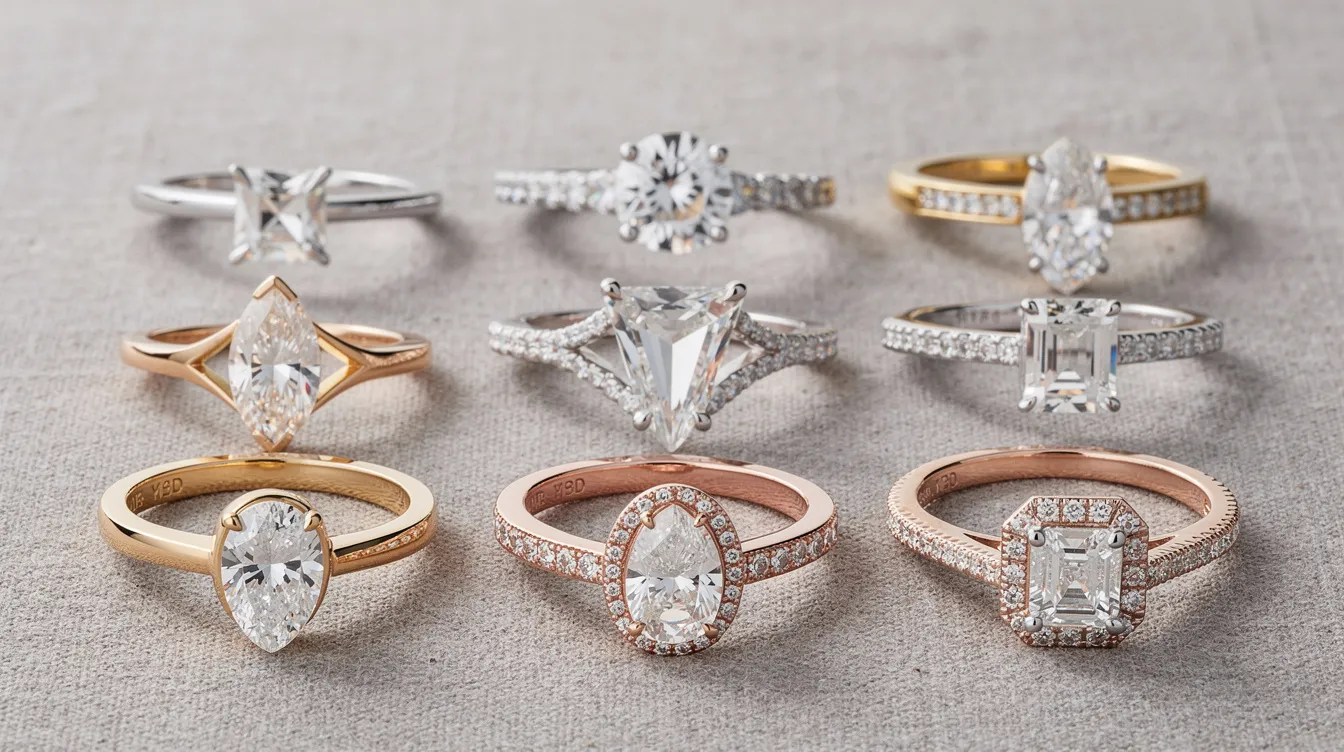
Round brilliant cuts are most forgiving—equally suited to four, six, or eight prongs. Oval cuts benefit from side prongs positioned to prevent spinning. Pear and marquise shapes need V-tips at vulnerable points. Princess cut stones require corner protection through V-tip or tab prongs at each square corner. Emerald cuts need flat prongs protecting their characteristic clipped corners. Cushion cuts work beautifully with four or six prongs depending on size.
Prong principles apply to colored gems too. A 1.50 ct Montana sapphire in a 6-prong setting creates a distinctive alternative to diamond-centric designs, though softer stones like emeralds may need slightly more protective prong coverage. Even sterling silver prong settings exist for fashion jewelry, though fine jewelry typically uses gold or platinum.
The girdle of cabochons and other non-faceted stones requires different approaches—but faceted gems follow similar logic regardless of color.
Maintenance, Longevity, and When to Repair Prongs
Well-made prong settings are built to last, but like any mechanical system, they wear and should be checked regularly.
Signs of wear include snagging that wasn’t there before, one prong looking shorter or thinner than others, or the stone audibly moving when gently tapped. A loose stone requires immediate attention.
Have prongs inspected every 6–12 months for daily-wear rings, especially pieces purchased 5+ years ago or vintage estate finds. A professional jeweler checks for thinning metal, stones becoming loose, and any bending.
Services include tightening slightly loose stones, retipping worn prongs with fresh metal, or completely rebuilding an old head for rings inherited from decades past. Trabert Goldsmiths offers prong repair, retipping, and full head replacements in-house in San Francisco—preserving sentimental stones while upgrading to sturdier metals when needed.
Custom Prong Design and Heirloom Restyling at Trabert Goldsmiths
Prong style is among the most customizable elements of any ring, and tailoring it to your taste and lifestyle makes all the difference.
The typical custom process at Trabert Goldsmiths includes in-person or virtual consultation, stone selection (natural or lab-grown), CAD or hand-sketch design, metal choice, and final hand-finishing of the prongs where they extend over the stone.
Recent custom work has transformed a 1980s 4-prong yellow gold solitaire into a platinum double-prong basket on a new pavé band, and reset an heirloom sapphire in a low-set 6-prong design for a medical professional needing snag-resistant prongs.
Schedule a design appointment at our San Francisco showroom or start a custom project online to explore prong options with real stones and metal samples.
FAQs
These questions address practical concerns about everyday wear and care not fully covered above.
How often should I have my prongs checked?
For rings worn daily, have prongs professionally inspected every 6–12 months—or sooner if the ring is vintage or previously needed repair. During inspection, a jeweler checks for thinning metal, loose stones, and bending, recommending tightening or retipping before problems become serious. Quick prong checks often happen during the same visit as professional cleaning at Trabert Goldsmiths.
Are prong settings safe for very active lifestyles?
Prong settings work for active people when design choices accommodate their lifestyle: lower-set stones, slightly heavier prongs, and protective baskets reduce snagging and impact risk. Remove any fine jewelry for heavy lifting, rock climbing, or contact sports. Those with extremely hands-on jobs may prefer a low, rounded 6-prong or consider mixing prongs with a partial bezel for added protection.
Can you reset my existing diamond into a new prong setting?
Yes—in most cases a diamond or colored stone can be removed from its original ring and reset into a new prong design, provided the stone is in good condition. The process at Trabert Goldsmiths involves evaluating the stone for chips or cracks, discussing desired style and metal, then designing a new setting around that specific gem. Resetting is popular for refreshing inherited rings while preserving original stones.
Is a bezel setting safer than a prong setting?
A full bezel usually offers more physical protection than prongs alone, especially against side impacts. However, prong settings showcase more of the stone and typically deliver more sparkle, making them preferred for many engagement rings. Clients wanting balance between safety and brilliance might consider hybrid designs—like a low bezel with discrete prongs or a protected basket-style setting.
Do prong settings cost more than other settings?
Cost depends more on craftsmanship, metal, and design complexity than on prongs alone. Simple solitaire prong rings can be among the most affordable fine settings. Intricate prong work—double prongs, hand-applied milgrain, or shared-prong eternity bands—requires more labor and may increase price. Visit or contact Trabert Goldsmiths with your budget and stone size so our team can propose several polished prong-setting options within your range.